LUMEN
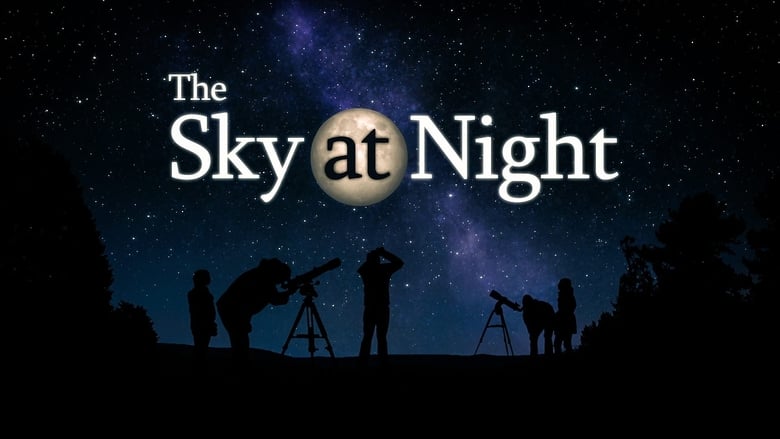
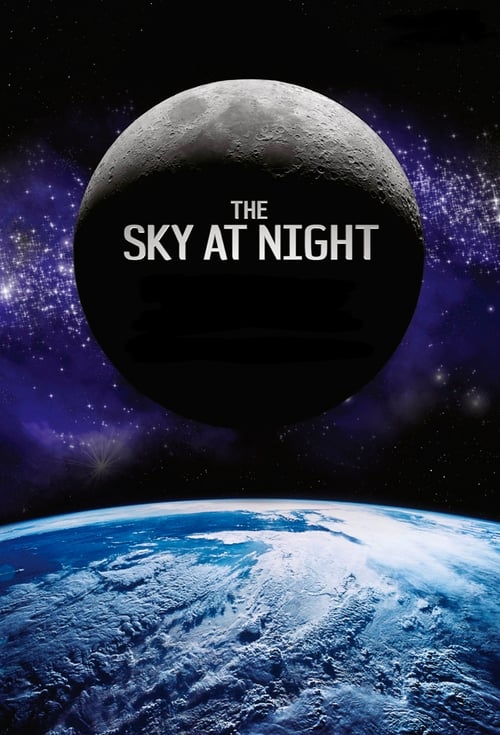
The Sky at Night poster

The Sky at Night

1957 8.4

Your monthly journey through the fascinating world of space and astronomy with the latest thinking on what's out there in space and what you can see in the night sky.

Play
  1. Play Mars - the Red Planet
    1

    Mars - the Red Planet

    1991-01-21

    Looking like a bright red star, Mars can be seen clearly in the south-west sky after dark. It has been studied since prehistoric times and many people believed there was life on the planet, yet the Viking spacecraft in the 1970s could find no trace. Patrick Moore explores the myths and legends surrounding Mars and takes a voyage over its surface.

  2. Play The Fastest Clocks in the Universe
    2

    The Fastest Clocks in the Universe

    1991-02-28

    Patrick Moore and Professor Andrew Lyne of Jodrell Bank investigate millisecond pulsars, the spinning remains of exploded stars.

  3. Play Jupiter and Family
    3

    Jupiter and Family

    1991-03-11

    Patrick Moore explains the new insight into Jupiter provided by the Pioneer and Voyager spacecraft.

  4. Play Bombardment from Space
    4

    Bombardment from Space

    1991-03-31

    Cosmic rays are not rays at all, but high-speed particles from space which bombard the earth from all directions all the time. Patrick Moore is joined by one of the world's leading experts in this field: the Astronomer Royal, Professor Arnold Wolfendale.

  5. Play Wanderers in Space
    5

    Wanderers in Space

    1991-04-28

    Patrick Moore talks to comet expert Dr Donald Yeomans.

  6. Play Guarding Their Secrets
    6

    Guarding Their Secrets

    1991-05-26

    Dr Ian McHardy , of Southampton University, joins Patrick Moore to give the latest on BL Lacertae, the object found in the northern constellation of Lacerta, the Lizard.

  7. Play Saturn the Ringed Planet
    7

    Saturn the Ringed Planet

    1991-07-01

    Patrick Moore explains what can be seen of Saturn, the ringed planet, now well in view during the hours of darkness, rather low in the southern sky. He also gives the latest results from the spacecraft which have studied Saturn from close range.

  8. Play Soviet Space Astronomy
    8

    Soviet Space Astronomy

    1991-07-29

    Patrick Moore visits Baikonur, the site from which all the important Soviet space missions have been launched and until recently out of bounds to westerners. He watches the launch of a probe to the orbiting space-station Mir and talks to leading Soviet astronomer Prof Alexander Boyarchuk.

  9. Play The Pole Star
    9

    The Pole Star

    1991-08-25

    Polaris is probably the most famous star in the night sky and has been of tremendous value to navigators through the ages. Patrick Moore discusses not only its position but also its nature - pointing out that Polaris is far more luminous than the Sun, and so far away that we see it as it used to be at the time of the crusades.

  10. Play Galaxy in Creation?
    10

    Galaxy in Creation?

    1991-09-23

    Astronomers have found what seems to be the most luminous object known in the universe. It is 16,000 million light years away and 300 million, million times brighter than the sun. With Patrick Moore.

  11. Play Hubble Space Telescope
    11

    Hubble Space Telescope

    1991-10-20

    Although the Hubble Space Telescope is sometimes regarded as a failure, it is making significant discoveries. Patrick Moore finds out about the early results.

  12. Play Nothing But Blue Skies
    12

    Nothing But Blue Skies

    1991-11-17
  13. Play The Strangest Planet
    13

    The Strangest Planet

    1991-12-09

    Patrick Moore reports on the remarkable discovery of planet moving around a neutron star. He is joined by the astronomers Professor Andrew Lyne, Setnam Shemar and Matthew Bailes of Jodrell Bank.

More Like This

Ratings & Reviews

No ratings yet

Sign in to rate The Sky at Night.

This product uses the TMDB API but is not endorsed or certified by TMDB.