LUMEN
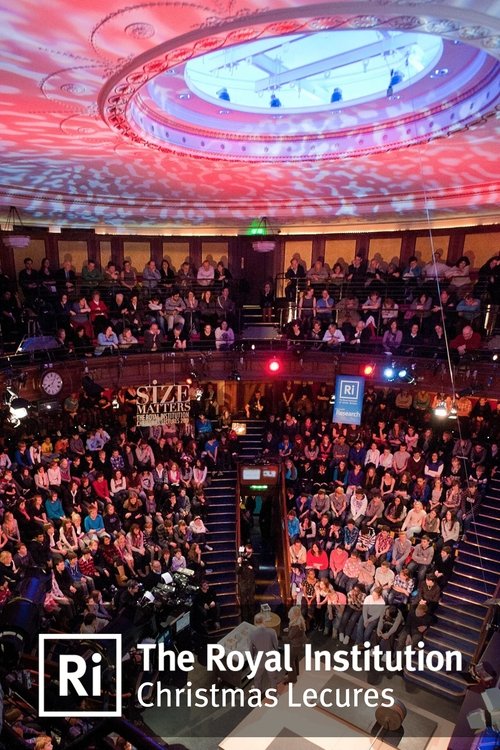
Royal Institution Christmas Lectures poster

Royal Institution Christmas Lectures

1966 5.1

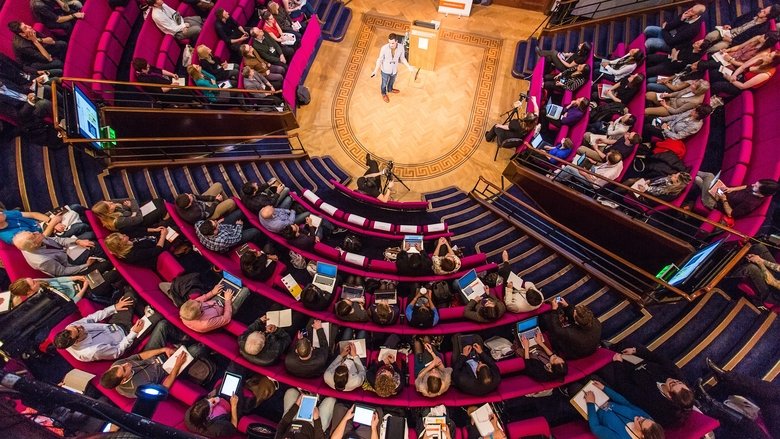
The Royal Institution Christmas Lectures are a series of lectures on a single topic, which have been held at the Royal Institution in London each year since 1825. The lectures present scientific subjects to a general audience, including young people, in an informative and entertaining manner. Michael Faraday initiated the first Christmas Lecture series in 1825. This came at a time when organised education for young people was scarce. Faraday presented a total of nineteen series in all.

Play
  1. Play Breaking the Speed Limit
    1

    Breaking the Speed Limit

    2008-12-29

    Professor Bishop goes on a fascinating exploration of the extraordinary world of the silicon chip and attempts to answer the plethora of questions associated with this technology. How is it possible to build a machine as complex as this with a billion tiny components packed into a space the size of a postage stamp? What are the challenges that are making it harder to continue the incredible improvement in speed, and what ideas are being explored to overcome them? Can new kinds of computers be built that are based on individual molecules? Can single electrons be used to store information? Could computation machines exist without consuming energy?

  2. Play Chips with Everything
    2

    Chips with Everything

    2008-12-30

    In this lecture, Professor Bishop reveals state-of the-art advancements in computer interaction, including new touch-screen technology. Surface computing allows people to manipulate documents just as they would pieces of paper on a table. Users are able to perform a host of functions, including organising and resizing photos, poring over maps and making selections from takeaway menus. The interface is capable of processing the requests of multiple users. Professor Bishop also demonstrates 3D displays and flexible screens that can be rolled up when they are not being used.

  3. Play The Ghost In The Machine
    3

    The Ghost In The Machine

    2008-12-31

    Computers are the most versatile machines ever invented, and the same piece of hardware can be used for thousands of different purposes. They can create virtual worlds with extraordinary realism, play chess better than almost any human, and even isolate a person’s position to within a few metres anywhere on the planet. What makes this possible is something that cannot be seen, felt or touched, but without it the digital revolution would never have happened. Professor Bishop investigates the software that brings a machine to life, and turns it into a phone, a music player, a game, or any number of other devices – including ones not even imagined by the creator of the hardware.

  4. Play Untangling the Web
    4

    Untangling the Web

    2009-01-01

    In this lecture, Chris Bishop untangles some of the mysteries of the web. He reveals one of the most surprising results in computer science, and shows how it is used to make web pages secure. He also studies the different ways of scrambling information to stop eavesdroppers from reading it, and explains how quantum physics can provide a secret means of transmitting data over the internet.

  5. Play Digital Intelligence
    5

    Digital Intelligence

    2009-01-02

    In the last of this year’s lectures, Chris Bishop looks at one of the great frontiers of computer science. He explains how some of the toughest computational problems are now being tackled by giving computers the ability to learn solutions for themselves. This has led to impressive progress with problems such as recognising handwriting and finding information on the web.

Cast

More Like This

Ratings & Reviews

No ratings yet

Sign in to rate Royal Institution Christmas Lectures.

This product uses the TMDB API but is not endorsed or certified by TMDB.